If you start browsing luxury homes in Bloomfield Hills, one thing becomes clear fast: there is no single “look” that defines the market. You might see a Tudor-style estate on a wooded lot, a Midcentury Modern home with walls of glass, or a newer custom build with Contemporary finishes and resort-style outdoor space. That variety can feel exciting and a little overwhelming, especially if you want a home that fits both your taste and your daily life. This guide will help you understand the luxury home styles you’re most likely to find in the area, what makes each one distinct, and how style can affect privacy, maintenance, and resale. Let’s dive in.
Why Bloomfield Hills Has So Much Style Variety
Bloomfield Hills developed from farm and orchard land into an estate suburb. According to the city’s welcome materials, wealthy business leaders began buying large parcels for summer and weekend homes, and over time those properties evolved into substantial estates along major roads such as Woodward Avenue.
That early development pattern still shapes the market today. Rolling hills, dense woodlands, and large lots help explain why many luxury homes in the area feel private, architectural, and closely tied to their landscape.
Cranbrook also plays a major role in the area’s design identity. Founded in 1904, the campus became a lasting architectural anchor for Bloomfield Hills and remains closely associated with art, design, and architecture. That influence helps explain why local luxury real estate is often defined by authorship, craftsmanship, and design pedigree, not just square footage.
Traditional Estate Homes
Traditional estate architecture is one of the most recognizable style groups in Bloomfield Hills. If you are drawn to timeless materials, formal rooms, and homes with a strong sense of permanence, this category may feel like the best fit.
A key local reference point is Cranbrook House, which Cranbrook describes as an English-Tudor estate and an Arts & Crafts masterpiece designed by Albert Kahn. The home is noted for hand-worked furniture, tapestries, tile, and stained and leaded glass, which reflects the level of craftsmanship that many buyers still value in older luxury homes.
In the broader market, you will often see terms like Tudor Revival, Tudor-style, English Arts and Crafts, Colonial, and Georgian. These homes often feature masonry exteriors, custom millwork, stone fireplaces, formal entry spaces, and room layouts that feel more defined than open-concept newer builds.
What Traditional Homes Feel Like
Traditional estate homes often suit buyers who want a more classic living experience. Large parcels, mature trees, and established landscaping can create a sense of privacy that feels hard to replicate in newer developments.
Inside, these homes may offer formal dining rooms, richly detailed libraries or studies, and entertaining spaces that feel distinct from one another. In current local listings, features like multiple fireplaces, large kitchens, terraces, and walkout lower levels continue to appear, showing that many of these homes now blend classic architecture with more modern everyday function.
What to Watch for in Older Estates
With historic or older luxury homes, original materials often matter. Craftsmanship can be a major selling point, especially when masonry, millwork, and hand-finished details have been carefully preserved or restored.
At the same time, updates still matter for daily comfort and resale. In Bloomfield Hills, the strongest listings tend to be homes that keep their architectural identity while improving kitchens, baths, mechanical systems, and outdoor living areas.
Art Deco and Saarinen Influence
Bloomfield Hills is not just about traditional estates. It also has a strong connection to curated, design-driven homes shaped by Cranbrook and its architectural legacy.
Saarinen House is a major example. Cranbrook describes it as Eliel Saarinen’s Art Deco masterwork and a total work of art. That matters because it reflects a local market where architecture and interiors are often viewed together, rather than as separate decisions.
For you as a buyer, this means luxury in Bloomfield Hills can be about design intention as much as size. A home with strong architectural authorship, distinctive interior detailing, and a clear design point of view may stand out in ways that feel different from a more conventional luxury property.
Midcentury Modern and Usonian Homes
If you prefer clean lines, natural light, and a stronger connection between indoors and outdoors, Bloomfield Hills also has a meaningful modernist thread. This is one of the most distinctive parts of the local luxury market.
Cranbrook’s Center identifies the Smith House as an example of Frank Lloyd Wright’s Usonian ideal. The Frank Lloyd Wright Foundation also describes the Affleck House as exemplary of Usonian design, with a one-story form, open living-dining-kitchen space, large windows, and a layout that emphasizes horizontality.
The Bloomfield Historical Society highlights additional design traits tied to local examples, including skylights, radiant heating, earthy hues, and a close relationship between the home and its landscape. In practical terms, these homes often feel calm, light-filled, and deeply connected to the property around them.
What Midcentury Living Looks Like
Midcentury Modern and Usonian homes usually create a different day-to-day experience than traditional estates. Instead of emphasizing formality, they often focus on openness, flow, and views.
A feature on a 1961 Bloomfield Hills home noted massive windows, architectural beams, a cantilevered hearth, and a strong relationship with surrounding hardwoods. That gives you a good sense of why many buyers are drawn to this style: the house can feel like part of the landscape rather than something placed on top of it.
What to Consider Before You Buy
These homes can be incredibly rewarding, but they often require thoughtful upkeep. Based on local examples, buyers should expect to pay attention to windows, rooflines, radiant or upgraded heating, and light control.
Homes with extensive glazing can also create practical challenges. Large windows bring in beautiful natural light, but they may also require ultraviolet protection for furnishings and finishes over time.
Contemporary and New Construction Luxury Homes
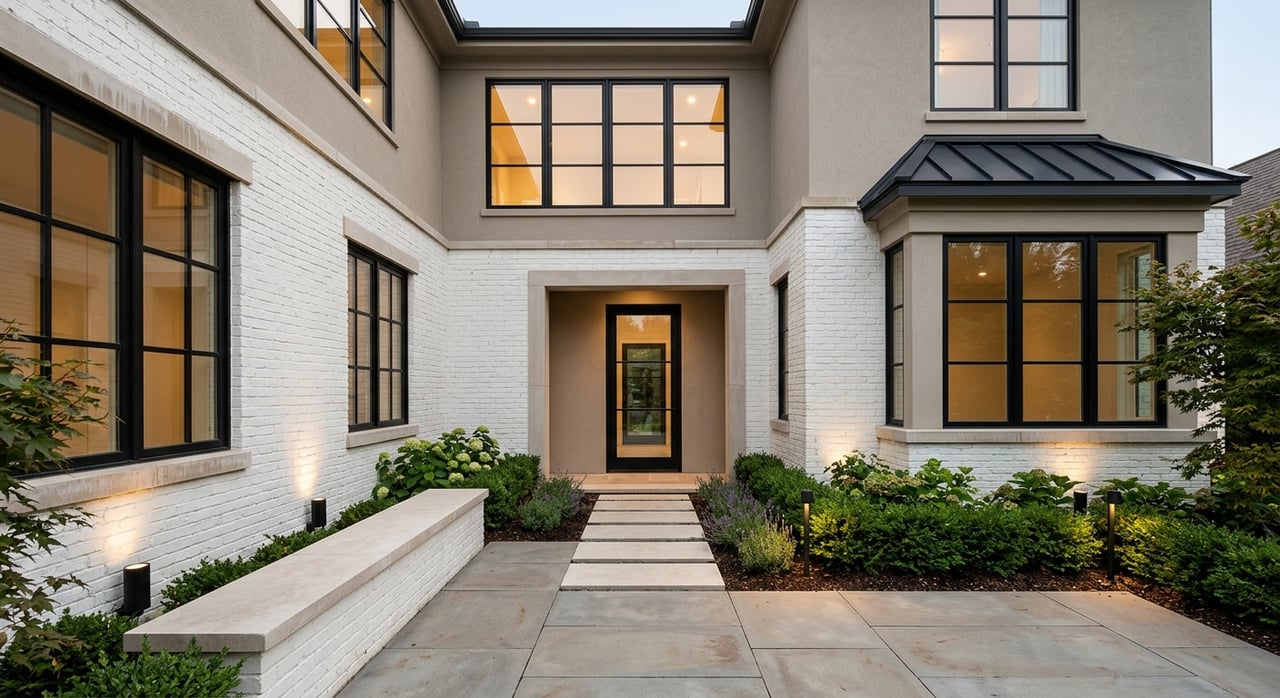
If you want newer systems, open layouts, and a more turnkey living experience, Bloomfield Hills also offers plenty of Contemporary and newly built luxury homes. This is especially important in a market where buyers often want modern functionality without giving up lot size or privacy.
Recent inventory shows just how broad this category can be. Local listings have included a French Provincial-inspired new-construction estate on 1.48 acres in a gated community, a Colonial new build, Colonial/Georgian and Colonial/Contemporary homes, and a 2015 Contemporary lakefront residence with expansive glass, terraces, and a large walkout lower level.
That mix tells you something important about the area. In Bloomfield Hills, newer luxury homes do not all follow one design formula. Instead, the market often blends classic exterior language with updated interiors, larger entertaining spaces, and modern amenities.
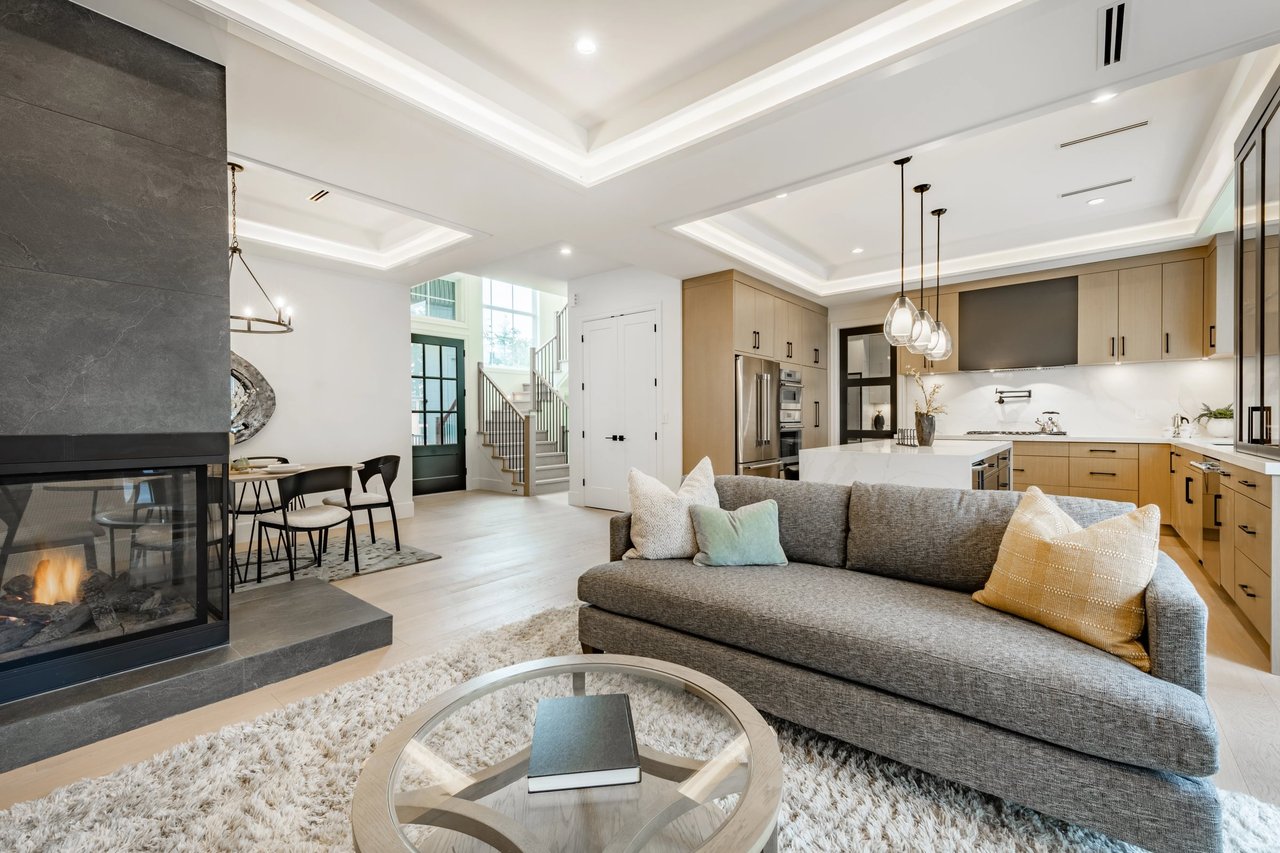
Common Features in Newer Luxury Homes
Many newer high-end homes in the area emphasize daily convenience and entertaining. Common features seen in current listings include:
- Large kitchens with oversized gathering space
- Open sightlines between main living areas
- Walkout lower levels
- Multiple fireplaces
- Terraces and outdoor entertaining areas
- Pools and high-end hardscape
- Wellness-focused spaces
- Expansive panes of glass
- Multiple kitchens in some larger homes
For many buyers, that combination feels practical and polished. You get updated systems and modern flow, while still benefiting from the large lots and private settings that define the area.
The Trade-Offs of Newer Homes
Newer homes can feel easier to manage day to day, but low-maintenance does not mean no maintenance. Pools, terraces, expansive glass, lower-level amenities, and larger exterior features all add lifestyle value, but they also add upkeep.
If you are comparing a new build to an older estate or Midcentury home, it helps to think beyond finishes. Consider how much maintenance you want to handle and which features you will actually use often.
How Style Affects Everyday Life
In Bloomfield Hills, architectural style is not just about curb appeal. It often shapes how a home lives, how private it feels, how light moves through the space, and what ownership will look like over time.
Traditional homes may offer more formal separation between rooms and a sense of historic character. Midcentury homes often prioritize natural light, horizontality, and landscape connection. Contemporary and new-construction homes usually focus on open flow, entertaining, and updated systems.
That is why style should be matched to your lifestyle, not just your visual preferences. The right home is the one that fits how you want to live now and how you want the property to function in the years ahead.
What Buyers Should Think About for Resale
Resale in this market often comes down to balance. Based on current listings and the broader local pattern, buyers tend to respond well to homes that preserve a recognizable architectural identity while offering modern functionality.
That means a Tudor-style home may benefit from updated kitchens and baths that do not erase its original character. A Midcentury home may stand out most when its clean lines and window design are respected while key systems are maintained or improved. A new build may hold appeal best when its design, amenities, and lot all feel cohesive rather than trend-driven.
If you are buying with long-term value in mind, focus on three questions:
- Does the home have a clear architectural identity?
- Have important systems and everyday-use spaces been updated thoughtfully?
- Does the property deliver the privacy, outdoor space, and functionality buyers expect in this market?
A Quick Note on Location Labels
When you search for luxury homes in this area, it is smart to verify the actual municipality. Many luxury listings are physically located in Bloomfield Township but carry a Bloomfield Hills postal city.
That distinction can matter when you are evaluating property details and comparing homes. If location precision matters to you, make sure the municipality is confirmed before assuming a home is within the city itself.
If you are weighing architectural style, lot setting, resale potential, or the pros and cons of new construction versus an established estate, working with a team that knows how these details connect can make the process much clearer. For strategic guidance in Bloomfield Hills and across Metro Detroit luxury markets, connect with Bernard Shamow.
FAQs
What luxury home styles are common in Bloomfield Hills?
- Buyers commonly encounter Tudor-style, English Arts and Crafts, Art Deco-influenced, Usonian, Midcentury Modern, Colonial, Georgian, French Provincial, and Contemporary homes.
What makes Bloomfield Hills luxury homes distinct?
- The market stands out for its mix of historic estate architecture, Cranbrook-linked design influence, large wooded parcels, and newer custom homes that blend classic style with modern living.
Are Midcentury Modern homes common in Bloomfield Hills?
- Bloomfield Hills has a notable modernist thread, including local examples tied to Usonian design ideas such as open living spaces, large windows, skylights, and strong landscape connection.
Do newer luxury homes in Bloomfield Hills all look contemporary?
- No. Recent inventory shows a mix of Contemporary homes, French Provincial-inspired new builds, Colonial new construction, and hybrids such as Colonial/Contemporary or Colonial/Georgian.
What should buyers consider when choosing a luxury home style in Bloomfield Hills?
- You should think about how the style affects daily living, natural light, privacy, upkeep, and long-term resale, not just how the home looks in listing photos.
Why do some homes say Bloomfield Hills when they are not in the city?
- Some luxury listings are physically located in Bloomfield Township but use a Bloomfield Hills postal city, so it is important to verify the municipality when comparing properties.